
The slow burn to success
When talent is obvious, but opportunity remains distant, patience can feel like a burden. For years cricketer Sanju Samson heard only postponements—next match, next series, next time. Yet he continued to prepare and believe. Which eventually paid off. What does the Thirukkural say about patience? Listen in.
Mar 14, 2026, 6:00 IST
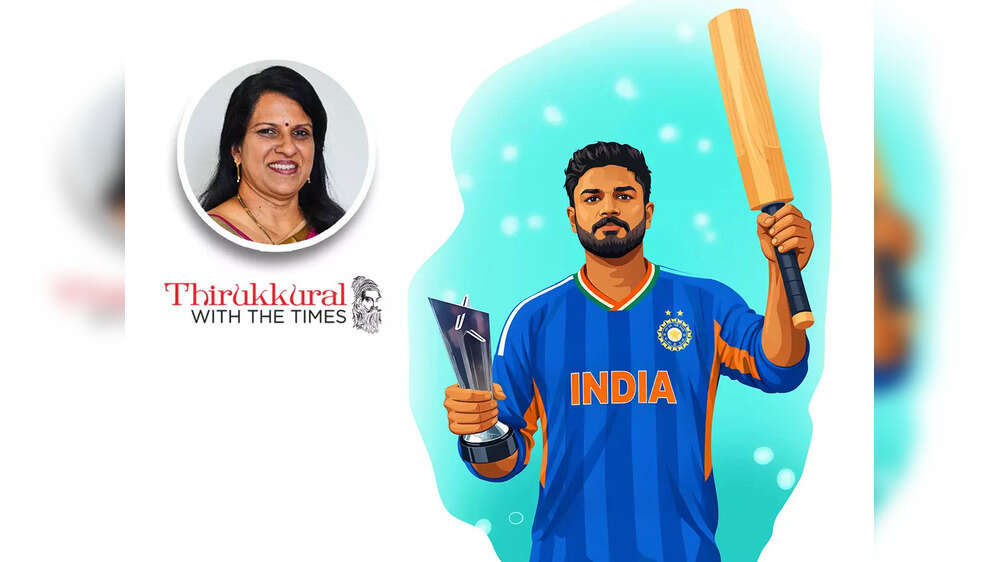
Thirukkural with the Times explores real-world lessons from the classic Tamil text ‘Thirukkural’. Written by Tamil poet and philosopher Thiruvalluvar, the Kural consists of 1,330 short couplets of seven words each. This text is divided into three books with teachings on virtue, wealth, and love and is considered one of the great works ever on ethics and morality. The Kural has influenced scholars and leaders across social, political, and philosophical spheres.Motivational speaker, author and diversity champion Bharathi Bhaskar explores the masterpiece.The photograph appeared on social media minutes after India lifted the T20 World Cup. Sanju Samson stood smiling, the trophy in his hands. Beside him stood his wife, equally radiant. She captioned the picture with disarming simplicity: “My trophy, with his trophy.”A charming line but it also carried a quiet story of endurance. Trophies rarely belong to one person; they belong to everyone who has stood beside them.India’s victory itself was historic. It was the third time India had won the T20 World Cup. For the first time, the defending champions retained the title. It was also the first time a host nation lifted the trophy. And the venue added a layer of poetic justice: the Narendra Modi Stadium in Gujarat—the very ground where India had suffered the heartbreak of losing the ODI World Cup to Australia. This time, the same stadium witnessed redemption. India defeated New Zealand by 96 runs.Across the tournament, Indian batsmen struck 106 sixes; 24 of them came from Sanju Samson, a player who had appeared in only five matches.In the quarterfinal against West Indies, India had to chase 196. Samson produced a breathtaking 97, not out. In the semifinal against England, he followed it with 89. And in the final against New Zealand, he delivered yet another 89. Three knockout games. Three commanding knocks.Remarkably, the man who had played only the final stretch of the tournament walked away as Player of the Series.But this triumph did not begin in Ahmedabad. It began years earlier, with a father’s belief.Sanju’s father, Samson Vishwanath, was a constable with the Delhi Police and a football player. Sports ran in his veins, and he trained both his sons in cricket and football. At one point, recognising Sanju’s rare talent with the bat, he made a bold decision; he moved the family back to Kerala.The reasoning was simple; Kerala was not crowded with aspiring cricketers. A gifted youngster might find the space to grow.Sanju was soon spotted by former Indian cricketer Sreesanth and later encouraged by Rahul Dravid. Yet talent alone did not guarantee a smooth journey.His career became a pattern of brilliance interrupted by silence—selected, dropped, recalled, benched. Even in this World Cup campaign, the team management called him in only when they needed a right-handed batsman to complement the left-handed Abhishek Sharma—a combination that unsettled bowlers.Five matches; but they were enough to transform a benchwarmer into a gamechanger.Coaches from Kerala recall something about Sanju’s training years. He would appear every day, rain or shine.That is why his story resonates far beyond cricket.Many people know the unsettling question that arises during long periods of uncertainty: How long must one wait?But waiting, when done with discipline, is rehearsal, sharpening oneself quietly until the moment arrives.Thiruvalluvar captured this idea with unusual boldness in a famous couplet:“Theyvaththaan aagaadhu eninumMuyarchchi than mei varuththa kooli tharum.” "Even if fate—or the gods—do not favour you,relentless effort will still yield its reward."There is something almost defiant in Valluvar’s tone. He is not merely praising effort; he is challenging destiny itself. Persistence, he suggests, can overcome even divine indifference.In that sense, perseverance becomes something sacred. Persistence itself becomes a kind of God.Sanju Samson’s journey seems to embody that truth.And when the moment finally came knocking, he answered it with sixes soaring into the night sky.
Explore Every Corner
Across The Globe
Israel Iran WarLPG Shortage IndiaJustin Verlander WifeCrude OilUAE CBSE Class 12 examBCCITrump TariffBengaluru LGP ShortageUttarakhand mining mafiaChennai mob beatingAadhaar Tatkal bookingBengaluru double-decker flyoverPAK vs BAN Live ScoreFIFA World Cup 2026US Section 301IndiGo fuel surcharge ticketsStrait of HormuzCrude oilThames pro-Iranian protestersCanada temporary foreign workerRomans' human feces medicine discoveryAlkmaar Cheese Market ritualSeema Misra Post Office scandalH-1B visa $100,000 fee controversyIndia emergency fuelIndia LPG crisisIran navy shipMaharashtra anti-conversion billIPL 2026IPL 2026 Schedule
Hot on the Web
Border 2 OttKhushboo SundarMonalisa BhosleDhurandhar The RevengeArchana Puran SinghEtihad AirwaysDubai Airports UpdateAkshay KumarAjith KumarSreeleela HouseDelhi AirportDhurandhar 2Jana NayaganEid Ul Fitr 2026Hansika MotwaniAir IndiaBaby NamesJr NtrShah Rukh KhanShakti MohanKamal HaasanHindu New Year 2026Gaurav KapurIndian BreakfastNeena GuptaQueen VictoriaHoroscope TodayNeanderthal MenWISA ActCooked Chicken Shelf LifeToday Gold Rate in ChennaiDelhi Weather TodayDelhi AQI TodayMumbai AQI TodayMaharashtra Public Holidays 2026Lpg Cylinder ShortageWhite PhosphorusTata SierraSam AltmanNasa Satellite CrashIndian Cobra VS Egyptian Cobra
Trending Topics
IndiGo fuel priceMenstrual Leave PolicyBengaluru fake cop robberyOman drone strikeIndia emergency fuelIndia ships Iran passageMissMeensy AutobahnLeon Draisaitl net worth 2026Ninja net worth 2026Cardi B Stefon Diggs breakupSuni Lee 23rd birthdayNikki BellaTaylor Swift relationshipDeion SandersDevonta Smith wedding photosEid Al Fitr 2026 Holiday DubaiDallas Edwards OVW referee injuryKobe BryantJJ Watt tipping culture debateDonna Kelce SpotifEnvoi AllenTom BradyBengaluru fake cop robberyKolkata building residents trappedGreater Bengaluru AuthorityPunjab fiscal health indexIndiGo fuel surcharge flightsIran LPG vesselsUS Section 301India forex reserves fallTim CookAtlassian LayoffsSam AltmanElon MuskIran Warns US Tech FirmsRoyal Enfield Meteor 350 Vs Jawa 42 FJJasprit Bumrah HouseStryker CyberattackScience NewsHow to watch ICC T20 World Cup 2026 in USAIPL 2026IPL Schedule 2026
Popular Categories
HeadlinesSports NewsBusiness NewsIndia NewsWorld NewsBollywood NewsHealth+ TipsIndian TV ShowsTechnologyTravelEtimesHealth & FitnessAstrologyInternational SportsDeorhiTechnology NewsAutoWeather TodayGold Rate Today DelhiSilver Rate TodayPlatinum Rate TodayIs Bank open todayIPL 2026IPL Schedule 2026Bank HolidaysPublic HolidaysBank Holidays in MarchPublic Holidays in MarchAries HoroscopeGemini Horoscope
Latest News
Is Joel Embiid playing tonight vs the Brooklyn Nets? Latest update on the Philadelphia 76ers star's injury report (March 13, 2026)Simone Biles reacts with heartfelt message after husband Jonathan Owens signs new deal with the Indianapolis ColtsBrooklyn Nets vs Philadelphia 76ers injury report: Who's playing, injured and questionable players, head-to-head records, team stats, and more (March 13, 2026)The Hundred: List of Pakistan players playing for Indians-owned teamsDaily Career Horoscope, March 14, 2026: Success, challenges, and breakthroughs; Know about your Career
Copyright © 2026 Bennett, Coleman & Co. Ltd. All rights reserved. For reprint rights: Times Syndication Service